Art has never been fixed. It has never belonged to one era, one style, or one definition. From the earliest marks on stone to the glowing screens of the modern world, art has changed again and again - in form, in purpose, in medium, and in meaning. Yet across all of these changes, one thing has remained constant: the human need to express, interpret, and leave something behind.
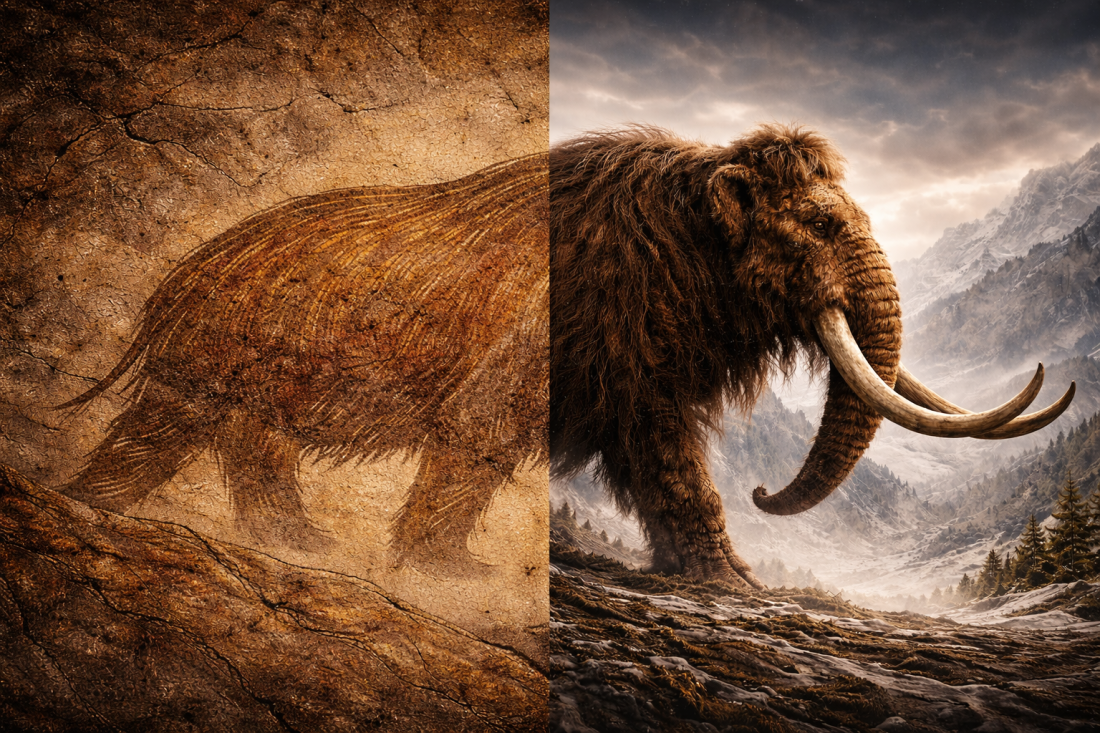
The earliest art we know was not created for galleries, critics, or collectors. It appeared on cave walls, carved into rock, painted with natural pigments, and shaped by hands that lived in a world far more immediate and uncertain than ours. These early images of animals, hunts, symbols, and human figures were likely tied to ritual, memory, storytelling, or survival. Even then, art was more than decoration. It was a way of making experience visible.
As civilizations grew, art grew with them. In ancient Egypt, Mesopotamia, Greece, Rome, and beyond, art became closely linked to religion, power, mythology, and order. Temples, statues, frescoes, and reliefs were not only beautiful objects - they were tools of meaning. They reflected what a society worshipped, feared, valued, and wanted to preserve. Art helped people explain the world and their place within it.
Later, in the medieval world, much of art remained tied to the sacred. Religious imagery dominated large parts of visual culture, especially in Europe, where paintings, stained glass, and illuminated manuscripts were deeply connected to spiritual life. Art was not always meant to be individualistic. In many periods, it served the collective imagination more than the personal one.
Then came the Renaissance, one of the most celebrated turning points in art history. Here, we see a renewed attention to realism, anatomy, perspective, proportion, and the human figure. Artists were no longer seen only as craftsmen. Increasingly, they became creators with vision, intellect, and personal style. Art became a space where technical mastery and human curiosity met. The world was studied more closely, and images became more concerned with depth, accuracy, beauty, and the complexity of human presence.
But art did not stop there. It never does.
In the centuries that followed, movements rose and fell, each one reshaping what art could be. Baroque art brought drama, movement, and emotional intensity. Romanticism leaned toward feeling, imagination, and the sublime. Realism returned attention to ordinary life. Impressionism loosened precision in favor of light, mood, and fleeting perception. Modern art broke rules more aggressively, asking whether representation itself was necessary at all.
By the time abstraction, surrealism, expressionism, and conceptual art arrived, the old boundaries had already begun to dissolve. Art no longer needed to imitate reality in order to matter. It could distort, simplify, fragment, provoke, or even reject visual beauty altogether. What mattered was no longer only what art showed, but how it made people think and feel.
This shift was important because it revealed something essential: art evolves not only when tools change, but when human consciousness changes. New forms of life create new forms of expression. Industrialization, war, urban life, psychology, politics, and mass media all left their mark on art. Artists responded not just to beauty, but to instability, speed, alienation, and modernity itself.
Then the digital era introduced another transformation.
With computers, design software, digital photography, editing tools, and online platforms, the process of creating and sharing art became faster, broader, and more accessible. Art was no longer confined to canvas, stone, or film. It moved onto screens, into code, into virtual spaces, and across global networks. The tools changed dramatically, but the deeper impulse remained familiar. People still wanted to create images, construct meaning, communicate identity, and shape how reality was seen.
The digital age also made art more democratic in some ways. More people could create, publish, remix, and distribute their work without waiting for traditional gatekeepers. At the same time, it raised new questions about originality, attention, authorship, and value. When images can be produced endlessly and shared instantly, what makes one image matter more than another? What becomes rare when creation becomes easier?
These questions are not separate from the history of art. They are part of it. Every major change in artistic tools has also changed artistic expectations. Perspective changed painting. Photography changed representation. Film changed visual storytelling. Digital tools changed production and access. Art has always moved alongside technology, sometimes resisting it, sometimes absorbing it, and sometimes becoming something entirely new because of it.
That is why the story of art is not a straight line toward perfection. It is a long conversation between human beings and the worlds they inhabit. Every era leaves its own visual language behind. Every generation redefines what is worth showing and how it should be shown. Art changes because people change, and people change because history does.
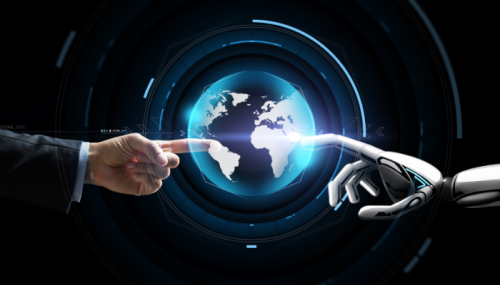
And now, in a time when artificial intelligence is beginning to influence how images are imagined and produced, art may be approaching yet another turning point. Whether this becomes a revolution, a disruption, or simply another chapter in a much older story remains to be seen. But if history tells us anything, it is that art does not end when new tools appear. It transforms - and in doing so, it asks us once again what creativity really means.